

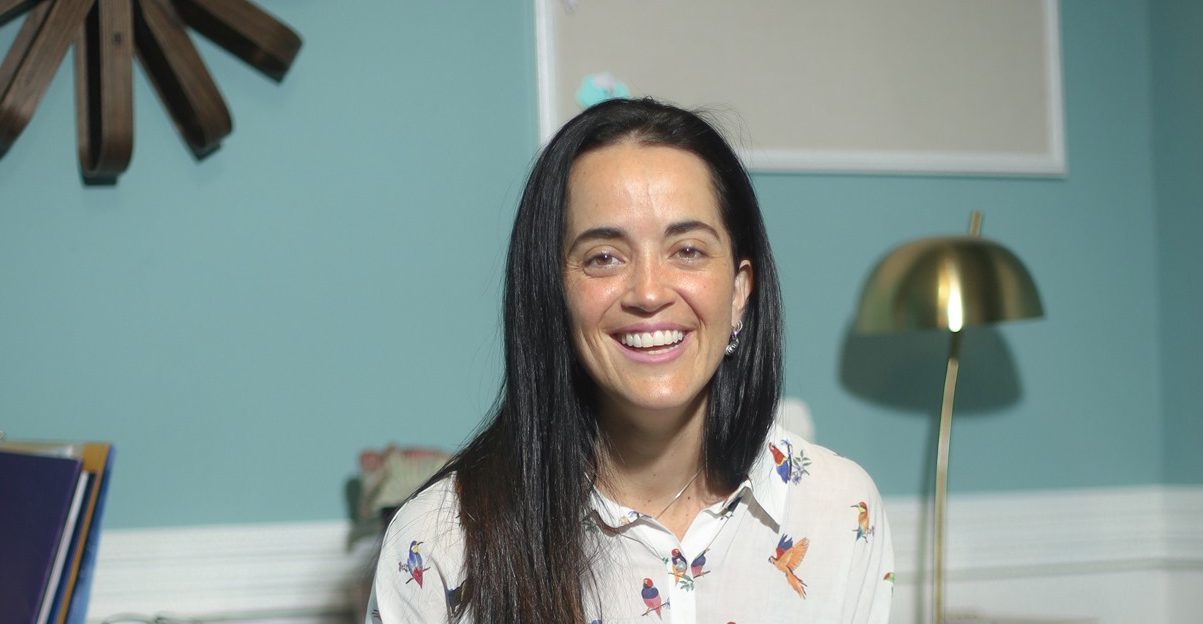
Constanza Safatle overcomes language, regulation hurdles to lead charge for better immigrant experiences in NL
You get the sense from talking with her that Constanza Safatle is a force. That makes perfect sense, considering the Chilean-Canadian has a brand new job leading TaskForce NL, a coalition of business owners in Newfoundland and Labrador with a philanthropic mission.
As her track record reveals, Safatle has a history of making change happen. At the moment, as she tells it, the most pressing thing businesses in Safatle’s organization can change is to help build a more robust support network for recent immigrants and temporary workers, so they actually want to stay here in the long term, instead of leaving for Southern Ontario.
Taskforce NL was initially set up by 75 Newfoundland and Labrador business owners to source PPE (personal protective equipment) during the early stages of the pandemic. At the moment it receives fairly modest funding from Atlantic Canada Opportunities Agency (ACOA).
Safatle seems uniquely positioned to understand the issues that prevent recent immigrants and temporary foreign workers from settling in Newfoundland long term. She arrived here seven years ago from Chile so her husband could attend Memorial University for graduate work in environmental science. In Chile, Safatle worked as a government lawyer. Arriving in St. John’s, where she had no license to practice, she was effectively barred from her profession. She also didn’t speak the language.
“I didn’t come with any english. My first challenge was to learn the language, and as a temporary worker I didn’t have access to any English classes,” Safatle says. The problem, she says, is IRCC (Immigration Refugees and Citizenship Canada) reserves beneficial programs, such as language classes, for refugees and permanent residents. Safatle was deemed a “temporary worker” and for her there was basically nothing.
“So I started to work in a Starbucks,” she says. “I learned English there, actually.”
Safatle’s career as a lawyer seemed to draw to a close, a fact she describes as “really painful. When you take decisions, you need to assume consequences,” she says.
Still, this is a success story.
Safatle had her first child, and while on maternity leave she started to feel that entering the labour market (at least, beyond working at a coffee shop) would be impossible if she didn’t start something on her own. She taught a sewing class for a local nonprofit catering to refugees. After that she worked for the YWCA-St. John’s as a service coordinator. But what she got attention for, at last, was her children’s clothing manufacturer, Newbornlander. This company makes charming, playful hats, clothes, shoes, and accessories for babies and toddlers. The patterns are things that kids, and let’s be honest, everyone, loves; watermelons, puffins, bears, and whales. She now has three employees, all immigrants.

Even though this company was a clear success, Safatle’s status as temporary worker was a significant barrier. She had been classified as a “worker,” not a business owner. So, technically, until she was a permanent resident, she had to partner with someone else to own her own company.
“I was a lawyer back home, so I am really good to fight,” Safatle says. She could help her employees work towards their PR (Permanent Residency), but, as the owner, she herself would not qualify. “This is an issue at the federal government level,” she explains.
There were meetings with ministers, and Safatle made her case that these kinds of restrictions didn’t make any sense. The result, rather amazingly, was an amendment in 2021 to the Corporations Act, which had previously required at least 25 per cent of a corporation’s directors be “resident Canadians.” Since the amendment, she now has complete control over the business she founded.
“And now you can register an incorporation without being a permanent resident,” she says, and that she considers this one of the biggest successes in her life so far.
As news of this hit the media, the province rolled out their announcement of this amendment with Safatle and Newbornlander as their case-in-point. There were photo ops with the Premier and ministers.
“The worst part is after I got attention for my business, many lawyers wrote (to me). We can support you, you can work here. And I’m like, ‘It’s too late.’”
Safatle says if organizations (law firms, local nonprofits) had supported her when she first approached them “my story would be different.” She wonders how many people in Newfoundland and Labrador have stories like this.
And then, just a few months ago, Safatle was chosen for a new role as Taskforce NL went from being a loose coalition of business owners run by a board of directors, to an organization with paid staff and a mandate to solve problems.
“Now being in this position it is such a dream, a pleasure,” Safatle says. “I have a voice, I have a life experience.”
Safatle intimately knows how thin the support system can be, depending on where you fall in the immigration system. She essentially fell through the cracks herself, and she says that if there is any hope in retaining immigrants in this province, there needs to be a support system for people in her position. Something she describes as a bellwether for this problem is that many of the nonprofits here that work with immigrants, don’t actually seem to hire many.
“They never put immigrants in positions to talk about their own experience,” Safatle says.
So, as she starts her new role at Taskforce NL, Safatle wonders: How can we attract and retain immigrants if there aren’t enough services for them? Right now, she sees temporary workers moving to bigger provinces that tend to have bigger support systems and communities. Tracking those numbers is one of her first goals.
“Yeah, I don’t believe in any action without data,” she says.
The recent arrival of Ukrainians as part of the province’s recruitment program has put a spotlight on some of these issues. Technically, Safatle says, the Ukrainians “are not refugees, they are temporary workers. Their visa has a deadline: three years.”
The provincial nomination program takes two years, she adds. So, these Ukrainians will need permanent jobs right now.
Safatle sees it as an opportunity to improve the situation, not just for these individual immigrants, but for the province.
“We have a crisis here today” she says, because many businesses don’t have enough staff, people are about to retire and have no succession plan.
At the same time, she thinks this is a great opportunity for government to face the challenges that temporary workers have. At the moment there isn’t enough analysis of whether the federal immigration programs are actually working to keep people here.
“This is your opportunity to improve,” is Safatle’s basic message to government in the wake of the Ukrainian crisis. Several barriers were swiftly removed for Ukrainians. They’ve gotten access to MCP (Medical Care Plan), and their driver’s license has been recognized by government, which makes insurance cheaper.
The job of Taskforce NL is to work with employers to solve the next round of pressing problems. To find a job is the first step, Safatle says; people will need to pay rent. For this round of Ukrainian arrivals, some employers are providing housing, or loans for housing, which she says is setting a good example, a blueprint maybe, for easing the transition. Inside some companies, staff are fundraising to help the same. But Safatle hopes there are meaningful jobs ahead. Right now, they are coordinating job fairs to try and help Ukrainians and employers find one another. She wants to see these temporary workers become permanent residents. That’s the metric she’s looking for.
The data will tell the tale. In the interim window, Safatle says, giving the leadership role to a woman, an immigrant, “this is a good practice that maybe others should take. I know so many other immigrants love Newfoundland, but if we don’t create the space, they will leave.”


