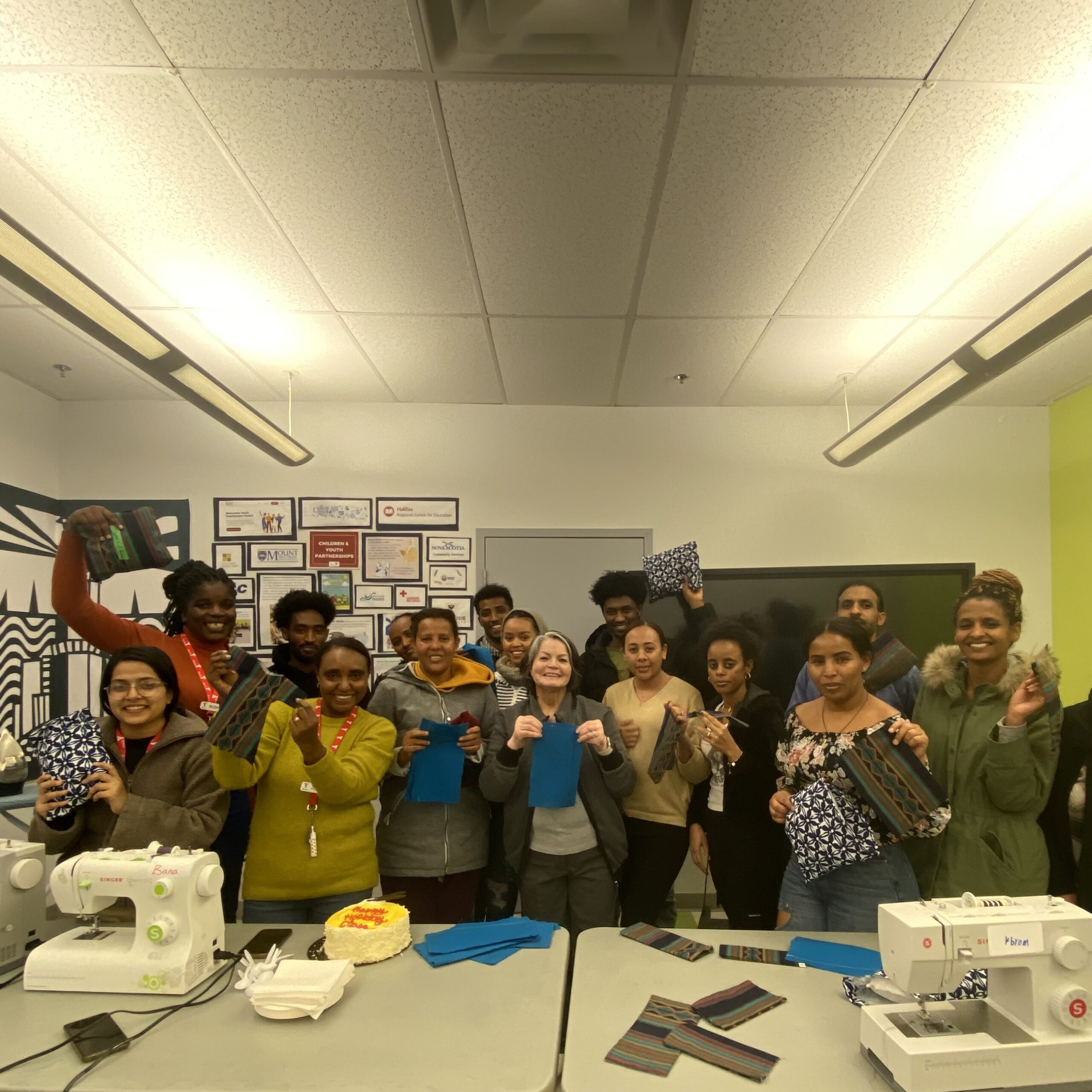
When the YMCA of Greater Halifax/Dartmouth launched its small sewing pilot program, it set out to do more than just hone newcomers’ sewing skills. It encouraged them to share their stories with each other and bring them together. Now, a year later, more than 50 people have gone through the program, and staff say seeing it come this far has been so fulfilling.
“I feel very grateful that I’ve been able to contribute a little bit in this process of developing something that has given smiles and happiness to the newcomers,” said Madhulika Handoo, one of the program’s creators and YMCA’s Active Living Coordinator.
The program kicked off in the fall of last year thanks to funding from the Nova Scotia Health Authority (NSHA) and Cobequid Community Health Board (CHB) through the Wellness Fund.

It started with few people and even fewer machines, but as time went on and newcomers spread the word, more and more people wanted to be part of it.
“Initially in the first cohort, we had about 10…but there were less sewing machines, there were five to six sewing machines, so we had to do a peer buddy system, and it was a little challenging to organize that,” said Handoo. “From the second cohort onwards, we tried to maintain a consistency of at least 14 to 15 clients that we can invite, so it kind of grew right after the first cohort, and we noticed that we needed to buy more tools for this.”
In the program, participants learn to make items like clothing, headbands, phone cases, pillowcases, baby dresses, and even clothing for dolls, as well as pouches and keychains—things they wanted and needed, things that sparked inspiration and conversation.
“They started asking each other about their home country and their culture and food, and when they were sewing, they were talking about the fabric and the material that they had back in their country,” said Handoo. “We tried to connect what kind of fabrics were available in their country and what kind of sewing did they do back in their country…they also started sharing their own traditions of making certain kinds of clothes, which had some cultural and traditional value to them.”
Beyond just learning to sew, people in the program found something just as valuable: friendship. As they all worked on projects together, helping each other out, they found themselves swapping stories of their own journeys and supporting each other in ways that went beyond the class.
“This sewing program has been amazing, I’ve made so many friends,” said Imelde Ndumimana, who comes from Burundi, East Africa. “I also connected with participants from different countries, learned bits of their languages, and got to taste foods from various cultures. It’s been a fun and eye-opening experience, and I feel lucky to be part of it.”

For some participants, the class even helped them feel safer and be able to open up about themselves.
“When I first joined the sewing class, I felt nervous and shy, and I didn’t understand how to use the machines, but with the support of the teacher and the encouragement of other participants, I quickly made many friends and learned so much about their cultures,” said Sweta Hashemi, who comes from Afghanistan. “I also gained valuable sewing skills and confidence that I never had before… Now I want to help and teach people who are interested in sewing.”
The program also has practical purposes. Handoo said it helped participants with English and that the lessons led some to careers in the sewing industry.
“We heard one of our clients got a job in a fabric garment space… They were one of the first ones who attended our first cohort.”

Some of the participants sewed back in their home country and were encouraged to step into more leadership roles in the class, while others were grateful to have the chance to learn a new skill around people happy to help.
“If the class continues, many people like me, who haven’t had the chance to learn these skills before, can gain this opportunity. I also learned a lot myself, and it’s been a valuable experience,” said Aita Bahadur Rai, a newcomer from Nepal.
Handoo said right now the program will likely go until December or January and that it has a long waitlist. She wants to eventually make it a permanent part of the YMCA’s programming that would include some sort of job placement or certification and maybe even an art display.
“We would love to see our own little YMCA sewing hub, which not just trains and builds on the basics of sewing, but also employs more folks or give them opportunities to connect with other employers so they can find a job… The dream would be to do a YMCA sewing installation where they come in and make projects, and they show it.”
Handoo hopes the program will inspire not only newcomers but everyone.
“This would be a great example for everybody who is around to see the positive impact that immigrants are also making in the country and also the beautiful cultural exchange that is happening.”